Some Latin plant names give away important clues about the nature of the plant. Here are a few of the more commonly used names, and perhaps a few rare ones, to broaden your knowledge of the wonderful world of Latin.
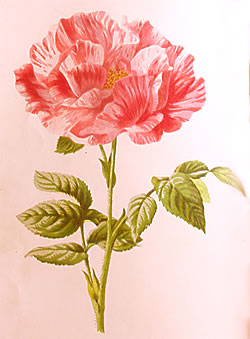
coccinea = Scarlet
Salvia coccinea – Scarlet sage
sulphureus = Sulphur-colored
Cosmos sulphureus – Cosmos
rotundifolia = Round-leaved
Tithonia rotundifolia – Mexican sunflower
communis = Growing in common; general
Ricinus communis – Castor bean
cylindrica = Cylindrical
Luffa cylindrica – Luffa sponge
tuberosum = Tuberous
Allium tuberosum – Garlic chives
sativum = Cultivated; planted deliberately
Coriandrum sativum – Cilantro/Coriander
vulgare = Vulgar; common
Foeniculum vulgare – Fennel
officinalis = Medicinal; of the pharmacopoeia
Melissa officinalis – Lemon balm
Paniculatum = having flowers in a cluster, with each flower borne on a separate stalk
Koelreuteria paniculata – Goldenrain tree
Place names:
sinensis or sinicus = of or from China
Camellia sinensis – Tea
peruviana = Peruvian; from Peru
Physalis peruviana – Cape Gooseberry
florentina = of or from Florence, Italy
Iris florentina – Sweet Violet is the source of orris, the powdered root still used as a fixative in perfumes and cosmetics. The rhizome, when dried, has the fragrance of violets; in modern perfumery, almost all “violet” scents are derived from orris.
persicaefolius or persicifolius = of or from Persia; resembling the peach
The peach, Prunus persica, was originally called Malum persicum, the “Persian apple”.
punica = of or from Carthage
The pomegranate, originally known to the Romans as the “apple from Carthage”, Malus punica, later became known as the “apple full of grains”, Pomum granatum. Now the modern botanical name, Punica granatum, incorporates both elements.
Definitions taken from Gardner’s Latin by Bill Neal